Live Well. Build Smart.
Search the blog...

What Happens to Your Skin After 40? Understanding Collagen, Elastin & Peptides
Have you ever looked in the mirror and noticed that your skin seems a little different than it did a few years ago?
Maybe it doesn't feel quite as firm. Fine lines are becoming more noticeable. Your skin feels drier, or products you've used for years don't seem to work quite the same way.
These changes are common, especially during perimenopause and menopause.
But understanding why your skin is changing can help you make more informed decisions about how to care for it.
And much of the conversation comes down to three things: collagen, elastin, and peptides.
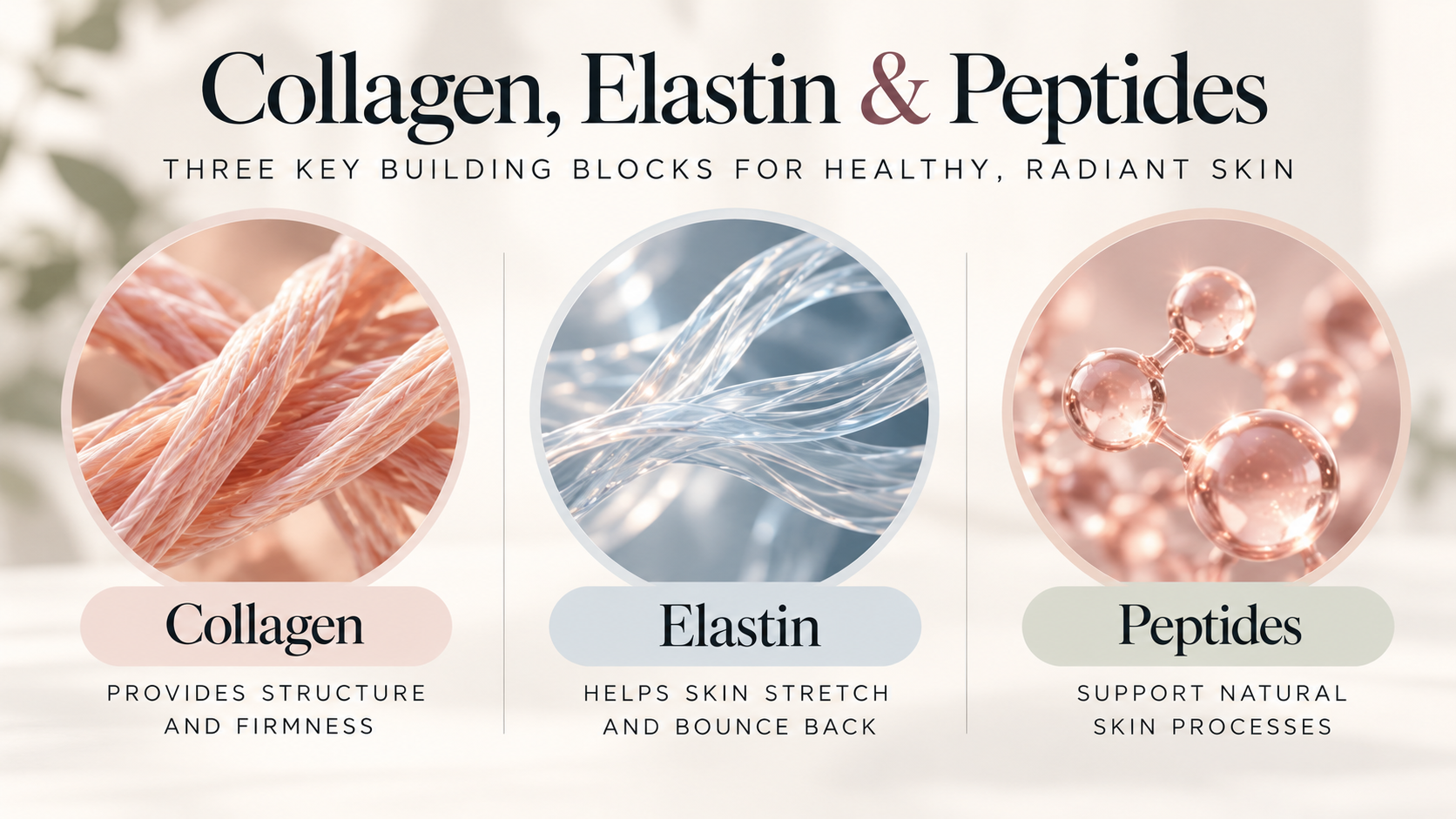
What's Actually Changing in Your Skin After 40?
Your skin is constantly renewing itself, but the processes that help maintain its structure and appearance change over time.
Several factors contribute to the differences you may notice during midlife.
1. Collagen Production Changes
Collagen is one of the primary structural proteins in your skin. It helps provide firmness, strength, and support.
As we age, collagen production gradually declines, and existing collagen undergoes changes.
This can contribute to:
More noticeable fine lines and wrinkles
Changes in skin firmness
A gradual loss of elasticity
Differences in skin texture
Estrogen also plays a role in maintaining skin collagen, which is one reason changes can become more noticeable around menopause.
2. Elastin Helps Skin Bounce Back
If collagen provides structure, elastin helps your skin stretch and return to its original shape.
Think about how your skin responds when you smile, laugh, or make facial expressions.
Elastin is part of what helps it recover.
Over time, changes in elastin fibers and other components of the skin's supportive structure can contribute to reduced elasticity.
That's why skin may begin to feel less resilient, even when you're taking good care of it.
3. Your Skin May Hold Less Moisture
Hormonal changes, environmental exposure, and changes in the skin barrier can all affect hydration.
You might notice that your skin:
Feels drier or tighter
Looks less smooth
Becomes more sensitive
Needs richer or more consistent moisturizing
Hydration and skin-barrier support become especially important during this stage of life.
4. Skin Renewal Changes Over Time
Your skin naturally replaces cells and repairs everyday damage.
As we age, some of these processes become less efficient.
This can contribute to changes in texture, brightness, and the appearance of uneven skin tone.
Sun exposure also plays a major role in visible skin aging, making daily sun protection one of the most important habits for maintaining healthy-looking skin.
What Are Peptides, and Why Are They Used in Skincare?
Peptides are short chains of amino acids—the building blocks of proteins.
In skincare, certain peptides are included in formulations designed to support the appearance and condition of the skin.
Different peptides have different properties, and researchers are studying how specific peptides may interact with skin processes.
Some are investigated for their potential to support the appearance of firmness, smoothness, and skin hydration.
However, not all peptides work the same way, and results depend on the particular peptide, formulation, concentration, and quality of the supporting research.
That's an important distinction because the word peptides alone doesn't tell you how effective a skincare product will be.
Can Skincare Products Really Support Collagen and Elastin?
This is where it's helpful to separate marketing promises from what skincare can realistically accomplish.
Some topical ingredients have evidence supporting improvements in the appearance of aging skin.
For example:
Retinoids: Among the better-studied ingredients for improving fine lines and signs of photoaging.
Vitamin C: An antioxidant involved in collagen synthesis, although results depend on the formulation.
Peptides: Certain formulations show promising results for specific skin concerns, but evidence varies considerably.
Moisturizers: Help improve hydration, support the skin barrier, and temporarily reduce the appearance of fine lines caused by dryness.
Sunscreen: Helps prevent additional UV-related damage to collagen and elastin.
No skincare product can completely stop the natural aging process.
But a thoughtful routine can support healthier-looking skin and help address some of the changes that happen over time.
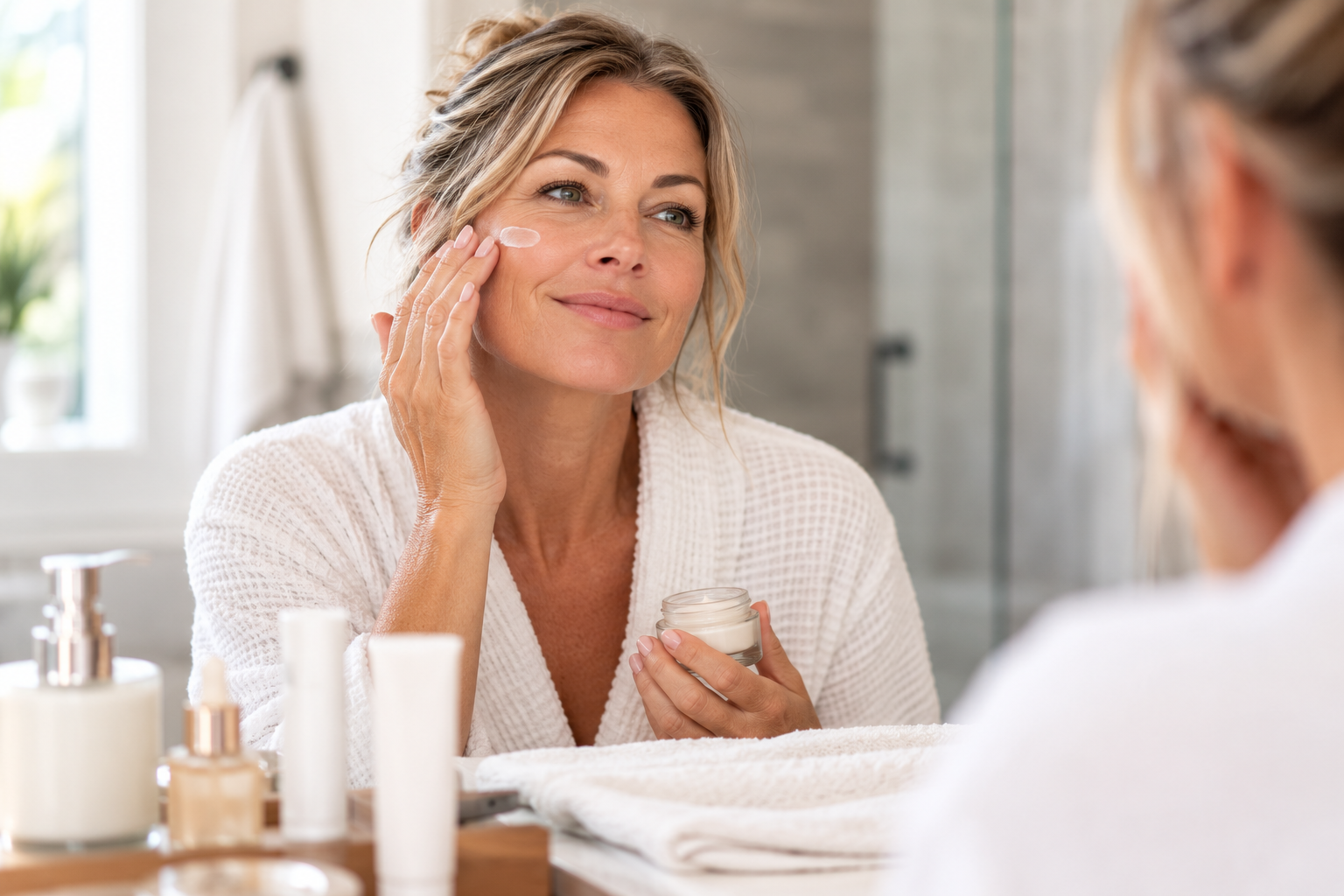
5 Habits That Support Healthy Skin After 40
You don't need a complicated, ten-step routine to take good care of your skin.
In fact, consistency with a few important habits can be more valuable than constantly switching products.
1. Protect Your Skin From the Sun
Daily broad-spectrum sunscreen with SPF 30 or higher helps protect against UV damage.
Sun exposure is one of the biggest contributors to premature changes in skin texture, pigmentation, collagen, and elastin.
2. Support Your Skin Barrier
Choose a moisturizer that helps your skin retain water and supports its protective barrier.
Ingredients such as ceramides, glycerin, and hyaluronic acid can be especially helpful for dry or dehydrated skin.
3. Prioritize Protein and Balanced Nutrition
Your body needs adequate nutrition to maintain and repair tissues, including skin.
Protein provides amino acids, while a varied diet supplies vitamins and minerals involved in normal skin function.
4. Make Sleep Part of Your Skincare Routine
Sleep supports many of the body's normal maintenance and recovery processes.
Although better sleep isn't a guaranteed wrinkle treatment, getting adequate rest supports overall health and may help your skin look and feel its best.
5. Choose Products With Purpose
Instead of adding every trending ingredient to your routine, think about what your skin actually needs.
Is dryness your biggest concern? Uneven tone? Fine lines? Changes in firmness?
Start with the basics, then consider targeted products based on your goals and skin sensitivity.
Exploring Natural Peptides in Skincare
One area I've become particularly interested in is peptide-powered skincare, especially formulations that incorporate peptides sourced from nature.
That's part of what drew me to MAKE Wellness Precision Skincare.
The collection includes three products designed for different parts of a skincare routine:
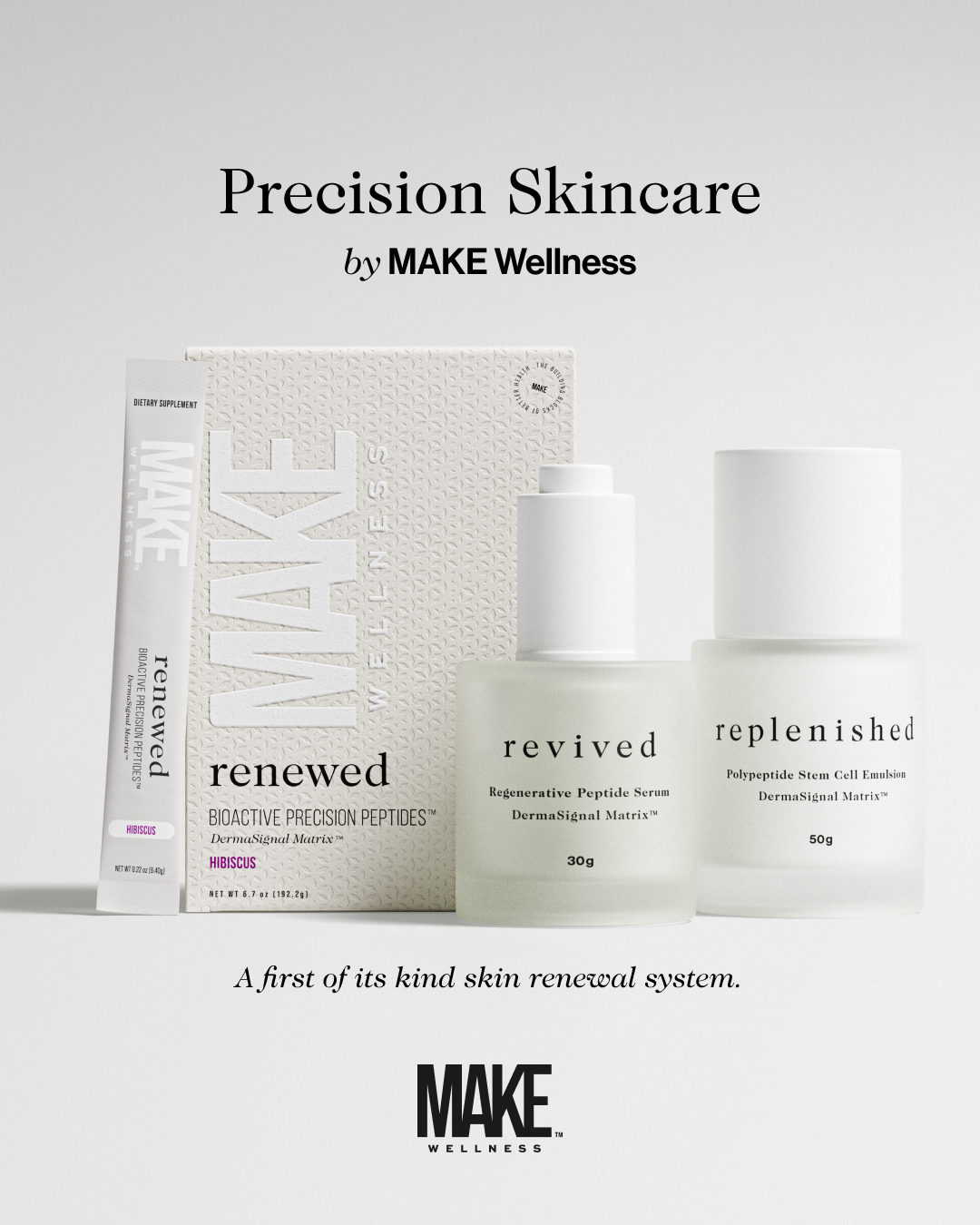
RENEWED — Bioactive Precision Peptides
A peptide-based dietary supplement designed as part of MAKE's skin wellness approach.
REVIVED — Regenerative Peptide Serum
A topical serum featuring the company's DermaSignal Matrix™ technology.
REPLENISHED — Polypeptide Stem Cell Emulsion
A moisturizing emulsion combining peptide-focused ingredients with plant-derived components.
What appeals to me is the idea of combining thoughtful daily skincare with a broader approach to wellness.
Of course, individual results vary, and the benefits of any product depend on its specific ingredients and supporting evidence.
EXPLORE MAKE PRECISION SKINCARE >>
Affiliate disclosure: I may earn a commission if you purchase through my link, at no additional cost to you.
Real Experiences: 60 Days With Precision Skincare
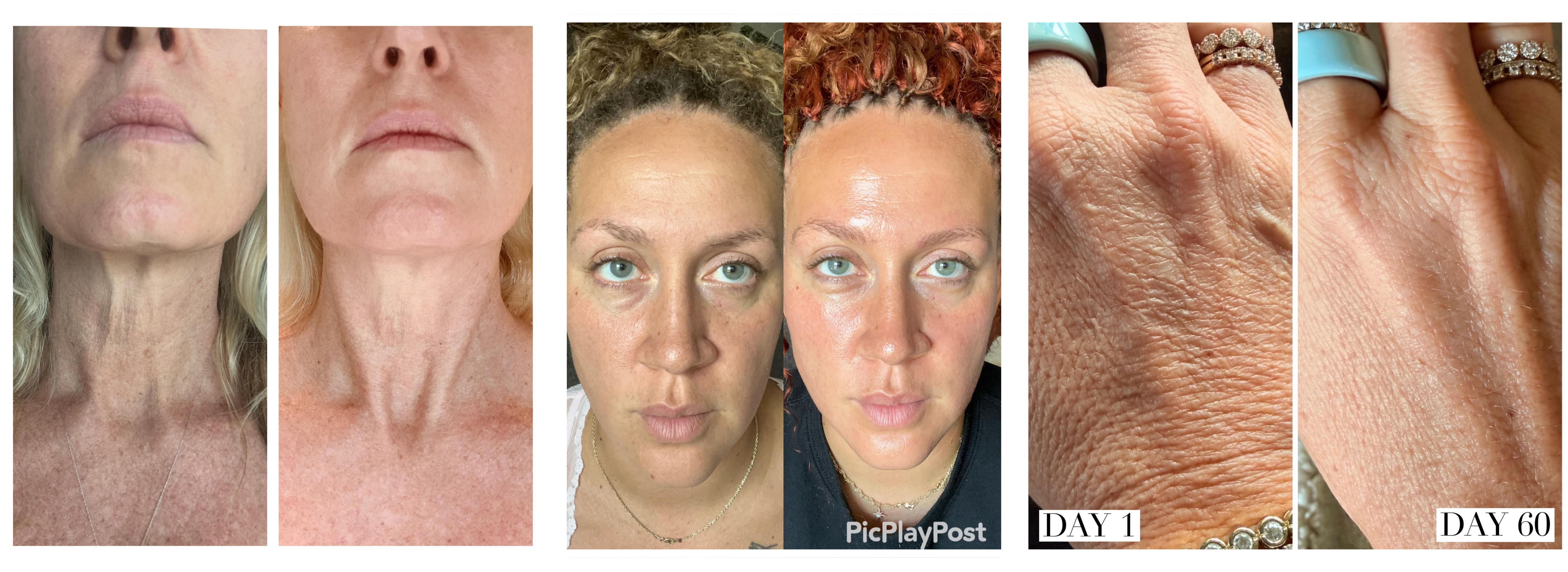
What can a consistent skincare routine look like over time?
These before-and-after photos were shared by individuals who used all three MAKE Wellness Precision Skincare products—RENEWED, REVIVED, and REPLENISHED—for 60 days.
The comparisons highlight changes in the appearance of facial skin, the neck, and hands. While these individual experiences are encouraging, skincare results vary, and differences in lighting, positioning, and other factors can influence how changes appear in photographs.
Individual results vary. These photos represent individual experiences and are not a guarantee of similar results.
Healthy Skin Is About More Than Looking Younger
One thing I appreciate about this stage of life is learning to approach wellness differently.
Instead of trying to reverse every sign of aging, I'm more interested in understanding what my body needs and finding practical ways to support it.
The same applies to skincare.
Collagen, elastin, hydration, and skin renewal all play important roles in how our skin looks and feels.
And while we can't stop time, we can make informed choices that help us care for our skin through every stage of life.
Healthy aging isn't about looking 25 again. It's about feeling good in the skin you're in.


Live Well. Build Smart.
Simple wellness education for women
who are ready to feel like themselves again.
Ready to learn more? Grab the free guide.
contact
hello@teresehamilton.com
Location
Mesa, AZ
FOLLOW ALONG
important notes
This site contains affiliate links. I may earn a commission on purchase made through my links at no additional cost to you.
These statements have not been evaluated by the FDA. These products are not intended to diagnose, treat, cure, or prevent any diseases.
© Terese Hamilton , LLC | All Rights Reserved | Mesa, AZ
Privacy Policy | Terms of Use | Disclaimer